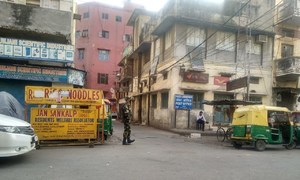
Pervasive challenges remain for hundreds-of-thousands of migrant workers in India whose lives were upended by the sudden lockdown across the country, in response to the threat of the coronavirus pandemic, said the UN human rights office, OHCHR, on Thursday.
High Commissioner Michelle Bachelet said in a statement that she was distressed by the plight of the informal migrant workers affected, many of whom were, in effect, forced to leave the cities where they worked at just a few hours’ notice, unable to pay for rent or food.
#India: UN Human Rights Chief @mbachelet distressed over plight of millions of internal migrants affected by the lockdown. She welcomes measures taken to limit #COVID19 impact but pervasive challenges remain
ow.ly/U3Gt50z3pQj


“The lockdown in India represents a massive logistical and implementation challenge given the population size and its density and we all hope the spread of the virus can be checked,” said UN human rights chief Michelle Bachelet.
And while welcoming steps to address the deadly crisis, she noted the importance of ensuring that measures responding to COVID-19 are “neither applied in a discriminatory manner nor exacerbate existing inequalities and vulnerabilities.”
Lacking jobs and money, and with public transportation shut down, hundreds of thousands of migrants who have no job security or protection, were forced to trek often hundreds of miles back to their home villages – with some dying on the journey, noted OHCHR.
Quarantine effort
In an effort to control the virus, on Sunday, the Home Affairs Ministry ordered States to intercept and quarantine the migrants for two weeks.
However, earlier this week, reports and images emerged of police officers apparently beating people – including migrants – with batons, for breaking quarantine rules and allegedly spraying some on the road, with disinfectant.
“We understand the strains on police services at this time, but officers must show restraint and abide by international standards on the use of force and humane treatment in their efforts to respond to this pandemic”, underscored the UN rights chief.
A number of States have now explicitly ordered police to stop using force to contain the virus.
Treat migrants with respect
The High Commissioner welcomed the instruction of India’s Supreme Court on Tuesday stating that the migrants be treated in a humane manner, including by providing them with enough food, water, beds and supplies as well as psychosocial counselling in shelters that are run by volunteers and not security forces.
“The Supreme Court’s order and its implementation will go a long way to ensuring the safety and rights of these vulnerable migrants”, Ms. Bachelet said. “Many of these people’s lives have been suddenly uprooted by the lockdown, placing them in very precarious situations”.
Coronavirus Portal & News Updates
Readers can find information and guidance on the outbreak of the novel coronavirus (2019-nCoV) from the UN, World Health Organization and UN agencies here.For daily news updates from UN News, click here.
The Government has also taken other measures to address the crisis, like distributing food on a massive scale and pressing employers to pay wages and landlords to waive rents.
“In spite of all these significant efforts, more needs to be done as the human tragedy continues to unfold before our eyes,” bemoaned the High Commissioner.
Special Measures should also take into account the particular situation of migrant women, who are among those most economically vulnerable and impacted by the situation.
Stop the stigmatization
Ms. Bachelet said she was also concerned over measures to contain the coronavirus which have the effect of stigmatizing parts of the community, such as stamping the hands of those quarantined, reportedly to ensure that they stay home, and erecting notices outside the residences of people quarantined.
“It is important to weigh such measures against the right to privacy and avoid measures that would unduly stigmatize people within the community, who may already be vulnerable due to their social status or other factors”, she asserted.
Containing COVID-19 in the country that hosts one-sixth of the world’s population will require efforts not only by the Government, but also the population at large.
The High Commissioner encouraged the Government to work shoulder-to-shoulder with civil society on the response, including the many non-governmental organizations already providing relief.
“This is a time for domestic solidarity and unity. I encourage the Government to draw on India’s vibrant civil society to reach out to the most vulnerable sectors of society, to ensure no one is left behind in this time of crisis”, concluded the
Comments
Post a Comment