COVID-19 threatening global peace and security, UN chief warns
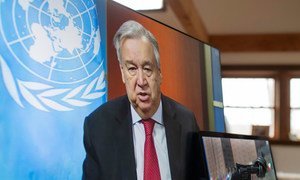
While the COVID-19 pandemic is first and foremost a health crisis, its implications are more far-reaching and could threaten global peace and security, the UN Secretary-General told members of the Security Council in a closed video-conference held on Thursday.
António Guterres said heightened solidarity is needed if the world is to defeat the crisis, which he called the "gravest test since the founding of this Organization", with Governments already struggling to address rising unemployment and economic downturn.
"But the pandemic also poses a significant threat to the maintenance of international peace and security -- potentially leading to an increase in social unrest and violence that would greatly undermine our ability to fight the disease", he warned, later stating that the Council’s engagement will be critical to mitigate these implications.
"Indeed, a signal of unity and resolve from the Council would count for a lot at this anxious time", he said.
Wide-ranging threats outlined
The UN chief outlined eight ways COVID-19 could undermine global peace and security, beginning with a further erosion of trust in public institutions if people perceive that their authorities had mishandled response or were not transparent.
Coronavirus Portal & News Updates
Readers can find information and guidance on the outbreak of the novel coronavirus (2019-nCoV) from the UN, World Health Organization and UN agencies here.For daily news updates from UN News, click here.
The pandemic’s economic impacts could create "major stressors" in fragile societies or less developed countries, for example, while the ensuing economic instability will have devastating consequences for women as they make up the majority in the worst-affected sectors.
Stressing that "this is not a time for political opportunism", the Secretary-General also feared electoral processes could be affected as postponing or proceeding with votes could spark political tensions and undermine legitimacy.
"In some conflict settings, the uncertainty created by the pandemic may create incentives for some actors to promote further division and turmoil. This could lead to an escalation of violence and possibly devastating miscalculations, which could further entrench ongoing wars and complicate efforts to fight the pandemic", said Mr. Guterres.
Terrorism and bioterrorism fears
With most Governments focused on the pandemic, terrorist groups could see "a window of opportunity to strike", with the situation in the Sahel a particular concern.
"The weaknesses and lack of preparedness exposed by this pandemic provide a window onto how a bioterrorist attack might unfold – and may increase its risks. Non-state groups could gain access to virulent strains that could pose similar devastation to societies around the globe."
COVID-19 has also hindered conflict resolution efforts, and many peace processes have stalled as countries respond. The pandemic also has triggered or worsened numerous human rights challenges.
"We are seeing stigma, hate speech, and white supremacists and other extremists seeking to exploit the situation", the UN chief said.
"We are witnessing discrimination in accessing health services.Refugees and internally displaced persons are particularly vulnerable. And there are growing manifestations of authoritarianism, including limits on the media, civic space and freedom of expression".
Silence the guns
The UN chief reminded Ambassadors of his recent appeal for an immediate global ceasefire during the pandemic.
Some warring parties have taken steps to lay down their arms, and UN representatives will continue their efforts on this front.
Following the meeting, Security Council members issued a statement expressing support for the Secretary-General's efforts concerning the potential impact of the pandemic to conflict-affected countries, and the need for unity and solidarity with all those affected.
Comments
Post a Comment