Water access critical to beating back COVID-19 spread in slum areas

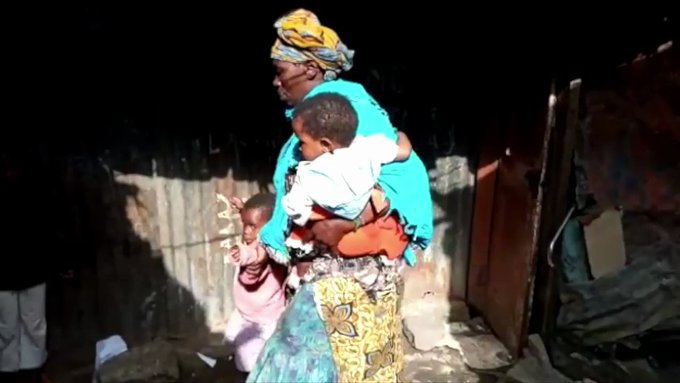
Fresh water for the residents of the Majengo slums on Kenya's coast has come on tap as part of a UN-Habitat rehabilitation project. (August 2018)
23 March 2020
As regular hand washing is a key tool in combating COVID-19, the UN and its partners are taking steps to ensure people living in informal settlements have access to running water at this critical time, according to the agency working to achieve more sustainable cities.
UN-Habitat said the impacts of the new coronavirus disease could be considerably higher on the urban poor living in slums, where overcrowding also makes it difficult to follow other recommended measures such as social distancing and self-isolation.
UN-Habitat is based in Nairobi, home to the Kibera slum, where people live hand-to-mouth and water access points are hard to find. They are even harder to get to when movement restrictions are in place, in the hope of preventing further spread of the disease.
Coronavirus Portal & News Updates
As resident Anna Nyokabi put it: “We don’t have enough water to drink and cook our food, so where will we get water to wash our hands frequently?”
More than two billion affected
If the international community is to beat back COVID-19, then Governments must provide Ms. Nyobaki - and the more than two billion people worldwide like her - with continuous access to sufficient water.
That’s the opinion of 10 independent experts appointed by the UN Human Rights Council in Geneva.
Measures to prevent #COVID19 in informal settlements can be a little difficult to achieve. We are working in Mathare, Kenya, to set up hand washing stations to help fight #COVID19. These wash stations are set up at the one stop resource centre there. #GlobalGoals #SDG11 #Youth

43 people are talking about this
“People living in informal settlements, those who are homeless, rural populations, women, children, older persons, people with disabilities, migrants, refugees and all other groups vulnerable to the effects of the pandemic need to have continuous access to sufficient and affordable water”, they said in a statement issued on Monday.
“Only this will allow them to comply with the recommendations of health institutions to keep strict hygiene measures”.
The experts, who are not UN staff nor are they paid by the Organization, called on Governments to immediately prohibit cuts to those people who cannot pay their water bill.
“It is also essential that they provide water free of cost for the duration of the crisis to people in poverty and those affected by the upcoming economic hardship. Public and private service providers must be enforced to comply with these fundamental measures”, they added.
UN-Water working with providers and communities
To address water access in slums, a coalition of UN agencies under the banner of UN-Water is working with national and local governments, as well as civil society organizations, women, youth groups and community leaders.
They are supporting a UN-Habitat-led global network of small-scale water and sanitation service providers, utilities and authorities. The network offers peer-to-peer support on a not-for-profit basis, and can provide technical advice, online training and other support, in addition to sharing information and active learning on COVID-19 response.
“Utilities can be encouraged to maintain water and sanitation service continuity and in ensuring affordability is not a barrier to access for the urban poor”, said UN-Habitat, which is a member of UN-Water.
UN agencies, programmes and other entities are also putting emergency safe drinking water and handwashing facilities in key locations in informal settlements and high-density public places such as markets, and bus stations.
They also are actively engaging community leaders and groups through existing slum networks, youth centres and networks, to train community leaders, to manage handwashing facilities, and to disseminate information about COVID-19.
Finally, in their work they are prioritizing the elderly and people living with chronic medical conditions who are the most vulnerable to the impacts of the disease.
Courtesy:UN News
Comments
Post a Comment