South-East Asian countries urged to ‘do more’ to fight COVID-19

People across the world are taking precautions against the COVID-19 coronavirus, including the man taking a ride in the photo above.
17 March 2020
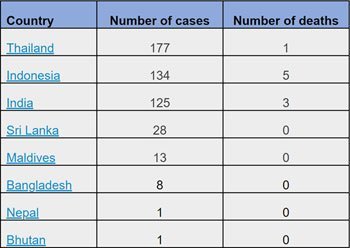
With South-East Asia reporting more than 480 cases of COVID-19 and eight deaths, the World Health Organization (WHO) on Tuesday called for countries to “act now” and urgently scale-up “aggressive” measures to tackle the disease.
Concerned about the new #coronavirus? Stay healthy while travelling!Avoid close contact with people suffering from fever & cough
nose
or mouth
#COVID19


 MYTH BUSTER:
Q: Is wearing rubber gloves while out in public effective in preventing the new #coronavirus infection?
A: No. Regularly washing your bare handsoffers more protection against catching #COVID19 than wearing rubber gloves.

48 people are talking about this
Dr. Poonam Khetrapal Singh, WHO Regional Director, warned that the situation is evolving rapidly.
“More clusters of virus transmission are being confirmed. While this is an indication of an alert and effective surveillance, it also puts the spotlight on the need for more aggressive and whole of society efforts to prevent further spread of COVID-19. We clearly need to do more, and urgently”, she said.
The 11 countries in WHO’s South-East Asia Region are home to over a quarter of the global population.
Eight have confirmed cases of the novel coronavirus disease: Thailand, Indonesia, India, Sri Lanka, Maldives, Bangladesh, Nepal and Bhutan.
Dr. Singh said the numbers indicate that some countries are clearly heading towards community transmission of the viral disease.
If this occurs, they will have to work to slow down transmission, as well as end outbreaks.
“We need to be geared to respond to the evolving situation with the aim to stop transmission of COVID-19 at the earliest to minimize the impact of the virus that has gripped over 150 countries in a short span of time, causing substantial loss to health of people, societies, countries and economies”, she said.
“Urgent and aggressive measures are the need of the hour. We need to act now”.
Dr. Singh highlighted the critical importance of continuous efforts to detect, test, treat and isolate patients, and to trace contacts.
People also are asked to follow WHO advice on reducing transmission through measures, such as proper handwashing, covering coughs and sneezes, and practicing social distancing.
Courtesy:UN News
Comments
Post a Comment