COVID-19: Mental health in the age of coronavirus
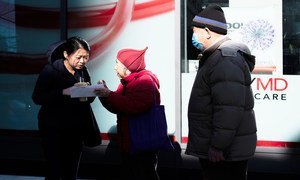
As the COVID-19 spreads in the United States, an increasing number of New Yorkers appear to have started wearing face masks as a precaution against the virus.
16 March 2020
Since January when the World Health Organization (WHO) determined the outbreak of the novel coronavirus disease, COVID-19, to be a “public health emergency of international concern”, stress levels everywhere have continued to mount.
As WHO and health authorities across the planet act to contain the outbreak, advice on safeguarding your mental health, have been developed by the UN health agency’s Department of Mental Health and Substance Use.
WHO’s 31-point guidance specifically targets the general population; healthcare workers; health facility managers; childcare providers; older adults, care providers and people with underlying health conditions; and those who are living in isolation to try and contain the spread of the pandemic.
"This is the defining global health crisis of our time.
The days, weeks and months ahead will be a test of our resolve, a test of our trust in science, and a test of solidarity.
Crises like #COVID19 tend to bring out the best and worst in humanity"-@DrTedros #coronavirus

"Like me, I’m sure you have been touched by the videos of people applauding #healthworkers from their balconies, or the stories of people offering to do grocery shopping for older people in their community"-@DrTedros #COVID19 #coronavirus twitter.com/DrTedros/statu…

283 people are talking about this
“Be empathetic to all those who are affected, in and from any country”, WHO highlights first, warning against stigmatizing anyone who has or had the virus.
It also recommended that you seek information updates from trusted sources only and at set times once or twice a day.
“The sudden and near-constant stream of news reports about an outbreak can cause anyone to feel worried”, said WHO. “Get the facts; not the rumours and misinformation”.
The website and local health authorities’ platforms can help to separate facts from speculation.
The UN Health agency also points to the benefits of helping others, such as by phoning neighbors or community members who may need some extra assistance.
“Working together as one community can help to create solidarity in addressing COVID-19”.
Those who help others
The UN health agency reminded everyone to “honour caretakers and healthcare workers…[for] the role they play to save lives and keep your loved ones safe”, while assuring healthworkers that it is normal to feel “under pressure” and emphasizing that stress is “by no means a reflection that you cannot do your job or that you are weak”.
WHO urged them to rest sufficiently, eat healthy foods, get physical activity and stay in contact with family and friends.
“This is a unique and unprecedent scenario for many workers, particularly if they have not been involved in similar responses”, said WHO, with the reminder that “this is not a sprint, it’s a marathon”.
Those in charge
WHO advises that protecting staff from chronic stress and poor mental health will provide them with the capacities they need to perform their duties.
And focusing on the longer term rather than short-term crisis responses, team leaders or health facility managers are encouraged to deliver quality communication and accurate information updates to all staff.
WHO outlined the benefits in rotating workers from higher- to lower-stress functions and in partnering inexperienced workers with those who are more experienced, to provide reassurance.
Maintaining that the buddy system helps to “provide support, monitor stress and reinforce safety procedures”, WHO advocated for outreach personnel to work in pairs and to “initiate, encourage and monitor work breaks”.
Coronavirus Portal & News Updates
Those with children
When caring for children, WHO underscored the importance of helping them to find positive ways to express feelings, such as fear and sadness.
“Children feel relieved if they can express and communicate their feelings in a safe and supportive environment”, the UN health agency maintained, encouraging that if safe, they be kept close to their parents and family.
If not, regular contact with parents should be maintained, such as twice-daily scheduled phone or video calls.
Caring for the vulnerable
As older adults and people with underlying health conditions who are vulnerable, may become more anxious, agitated and withdrawn during the outbreak, WHO stressed the importance of relaying clear instructions in a concise, respectful and patient way, noting that pictures may also be utilized.
“Engage their family and other support networks” to provide information and help them practice prevention measures, including handwashing, the UN health agency said. And when in isolation, stay connected and maintain daily routines, as much as possible.
“Keep things in perspective…and avoid listening to or following rumours”, concluded WHO.
“Keep things in perspective…and avoid listening to or following rumours”, concluded WHO.
Pregnant, breastfeeding women
Meanwhile, the UN Population Fund (UNFPA) has recommended that breastfeeding women who become ill should not be separated from their newborns.
While there is no evidence that the illness can be transmitted through breastmilk, UNFPA urged mothers who are infected to wear a mask when near their baby, wash their hands before and after feeding, and disinfect contaminated surfaces.
“If a mother is too ill to breastfeed, she should be encouraged to express milk for the baby, while taking all necessary precautions”, the UN’s women’s health agency said. “Mental health and psychosocial support should be made available to affected individuals and their families”.
Comments
Post a Comment