Coronavirus update: humanitarian work must continue, ‘no exceptions’ for bold action in Europe, ensure sufficient medicine stocks
Coronavirus update: humanitarian work must continue, ‘no exceptions’ for bold action in Europe, ensure sufficient medicine stocks
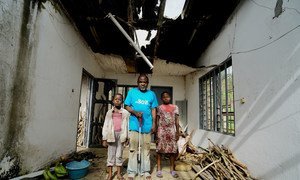
Ambuchu John is 58 years old and completely blind, seen here standing in his new home with his two eldest children, having been displaced by the fighting in Buea District, Cameroon.
17 March 2020
UN humanitarian agency issues reminded that millions need humanitarian aid, WHO Europe want countries to take “bold steps” to stop coronavirus, and a UN-backed narcotics body calls for sufficient stocks of medicine to be maintained.
Millions still need life-saving UN support, reminds humanitarian official
A senior UN humanitarian official issued a reminder on Tuesday, that millions of vulnerable people are still relying on the Organization’s life-saving assistance to survive.
Speaking to UN News in Geneva, Jens Laerke, Deputy Spokesperson at the UN's humanitarian coordination office, or OCHA, said that some of the countries affected by the coronavirus pandemic are already in humanitarian crisis -- due to conflicts, natural disasters and climate change.
“It is extremely important that we continue the life-saving work in these countries”, he said, “and that we sustain the humanitarian response across the world”.
OCHA teams in Geneva, said Mr. Laerke, are supporting the coordination, information management and logistics of humanitarian support. In the field, OCHA is also working to bolster countries that either already have COVID-19 cases or may see them in the future.
“It's very important that we leave no one behind in this crisis, and we must beat back this together”, he added, echoing UN calls for global solidarity.
‘Take the boldest action to stop or slow the spread of the virus’: WHO Europe chief

With Europe now the epicentre of the COVID-19 pandemic, every country, with no exceptions, must take the boldest action to stop or slow the spread of the virus, said Hans Kluge, Europe chief of the World Health Organization, WHO, on Tuesday.
Mr. Kluge, speaking from an empty WHO regional office in Copenhagen, where staff are now working remotely, declared that, at a time when the demand for WHO support is growing, the virus “can be beaten back by solidarity within communities, within nations and within our region”
“Everyone in society has a role to play: not to be infected yourself, and if you are infected, to protect others, especially the elderly and people with underlying medical conditions”.
Are governments doing enough?
With many people asking if governments are doing enough to stop the virus, the WHO Europe chief said, adding that the whole of the region – where a third of global cases are now being reported – is “alert and on guard”, with preparedness, readiness and response measures on multiple levels.
Mr. Kluge explained that the context for each country is different, depending on the level of infection, and the speed at which COVID-19 is spreading.
Coronavirus Portal & News Updates
Basic actions are the same, he said, but the emphasis changes depending on which stage a country has reached. All countries, though, should work to “prepare and be ready; detect, protect and treat; reduce transmission; and innovate and learn, while protecting the vulnerable people”.
Ensure access to medicine: UN narcotics body
Meanwhile, the International Narcotics Control Board, based in Vienna, wants governments to ensure that national plans to counter coronavirus do not interfere with the supply of controlled substances, such as pain relief medication.
The UN-backed body also called on all countries to ensure that there are sufficient buffer stocks of controlled substances to guarantee availability of those medicines throughout the duration of the pandemic.
The President of the Board, Cornelis P. de Joncheere, has reminded Governments that, in acute emergencies, it is possible to use simplified control procedures for the export, transportation and provision of medicinal products containing controlled substances.
Courtesy:UN News
Comments
Post a Comment