Around the globe, citizens of many democracies are worried that their governments are not doing what the people want.
When voters pick representatives to engage in democracy, they hope they are picking people who will understand and respond to constituents’ needs. U.S. representatives have, on average, more than 700,000 constituents each, making this task more and more elusive, even with the best of intentions. Less than 40% of Americans are satisfied with their federal government.
Across Europe, South America, the Middle East and China, social movements have demanded better government – but gotten few real and lasting results, even in those places where governments were forced out.
In my work as a comparative political scientist working on democracy, citizenship and race, I’ve been researching democratic innovations in the past and present. In my new book, “The Crisis of Liberal Democracy and the Path Ahead: Alternatives to Political Representation and Capitalism,” I explore the idea that the problem might actually be democratic elections themselves.
My research shows that another approach – randomly selecting citizens to take turns governing – offers the promise of reinvigorating struggling democracies. That could make them more responsive to citizen needs and preferences, and less vulnerable to outside manipulation.


In the beginning
Democracy started as self-rule, where average citizens took turns in running public affairs. In ancient Athens, democracy demanded many hours of public service and active participation. The Public Assembly, open to all 40,000 adult male citizens, met 40 times a year to discuss laws.
But even with such a small society, some power needed to be delegated to smaller groups. The executive branch and the courts each consisted of 500 members who met daily. Those bodies were made up of citizens who were chosen at random.
More recent democratic societies, particularly those inspired by the American model, favored rule by high-minded elites. In Federalist Paper No. 63, James Madison advocated for excluding average people from political power, in favor of elected representatives, who he thought would be wiser.
Madison and fellow Founder Alexander Hamilton feared mob rule so much that they argued against the direct elections of senators and presidents. Indirect methods, using state legislators and the Electoral College, became part of the U.S. Constitution. In 1913, the 17th Amendment changed how senators were elected, but the Electoral College remains.
Over time, Americans came to accept this rule by elites. They retreated into their private lives and took care of personal and professional business, leaving public business to others. Much scholarship has chronicled how this mass disinterest in politics has led to manipulation of public opinion and massive abuse by economic elites and corporate interest groups.
Fortunately, some solutions can be found in 2,500 years of democratic experiences.

Get longtime officials out of the way
Long-serving elected officials can consolidate knowledge, power and leverage over others. Members of Congress are asked to spend more time with donors and lobbyists and raising money for reelection and their political party than with their constituents. The self-interested focus on reelection distracts them from serving the public with all their energy.
The Roman Republic limited people from holding public office more than once in their entire lives. After their term was over, each person had to publicly account for their actions while in office. That’s a far cry from the standard U.S. political path from small local offices through state legislatures to Congress, and beyond.
Involve everyone possible locally
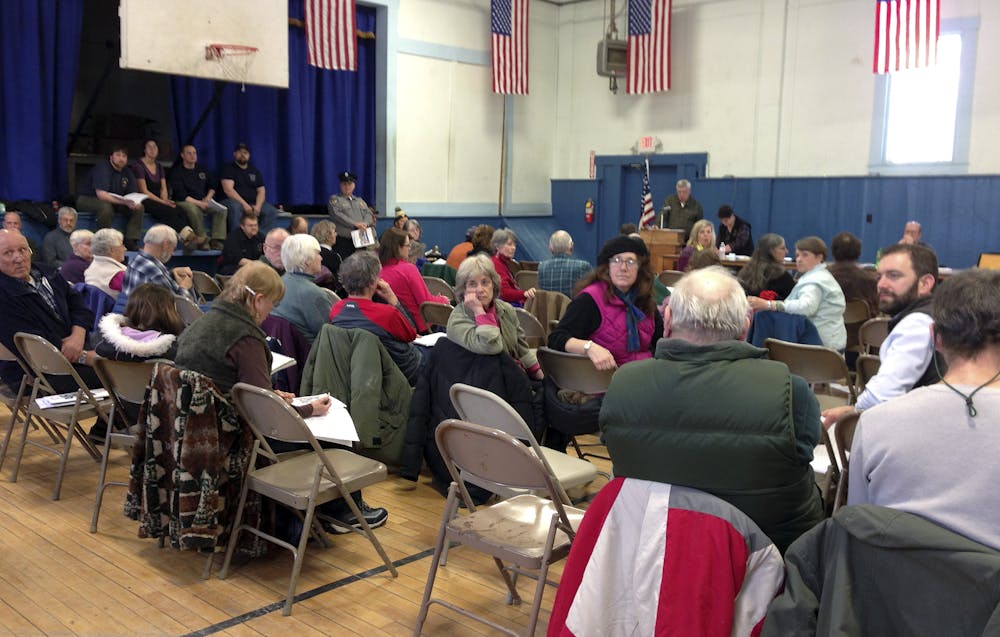
For local affairs, citizens can participate directly in local decisions. In Vermont, the first Tuesday of March is Town Meeting Day, a public holiday during which residents gather at town halls to debate and discuss any issue they wish.
In some Swiss cantons, townspeople meet once a year, in what are called Landsgemeinden, to elect public officials and discuss the budget.
For more than 30 years, communities around the world have involved average citizens in decisions about how to spend public money in a process called “participatory budgeting,” which involves public meetings and the participation of neighborhood associations. As many as 7,000 towns and cities allocate at least some of their money this way.
The Governance Lab, based at New York University, has taken crowd-sourcing to cities seeking creative solutions to some of their most pressing problems in a process best called “crowd-problem solving.” Rather than leaving problems to a handful of bureaucrats and experts, all the inhabitants of a community can participate in brainstorming ideas and selecting workable possibilities.
Digital technology makes it easier for larger groups of people to inform themselves about, and participate in, potential solutions to public problems. In the Polish harbor city of Gdansk, for instance, citizens were able to help choose ways to reduce the harm caused by flooding.
Randomly select representatives

In larger groups, like national and international governance, I think that it is worth returning to the Athenian method of selecting representatives: by random selection, rather than by election.
As was true in ancient times, this allows average people to participate in government at the same time as it reduces campaigning, and slashes the influence of special interests, lobbyists and financial donors.
A variation on this idea, which Stanford political scientist James Fishkin has called “deliberative polling,” involves randomly selected citizens who are given expert information and guided in their discussions by facilitators. During the 1990s, this method led eight Texas energy companies to adopt the most advanced wind-energy policies of the country.
In 2016, Ireland convened a group of 99 citizens chosen at random, plus a national supreme court judge as a chairperson. Their task was to study and report to the nation on key issues facing the country, including abortion, an aging population and climate change.
When considering reforming their electoral systems, the Netherlands and Mongolia, as well as the Canadian provinces of British Columbia and Ontario, all chose citizens at random to debate the issues, instead of holding elections.
All of this leads me to conclude that what the public views as the best political decisions are not made by professional politicians. Rather, average citizens, selected randomly and given the time, necessary information and space to listen to each other and to debate, are better suited to make these decisions while acquiring practical experience about politics and fighting widespread political alienation at the same time.
In addition, the random selection of lawmakers who convene when necessary hinders the emergence of a political class of professionals and undermines the need for anyone to campaign for office. Personal wealth and campaign contributions would be irrelevant. Media manipulation would be useless, as nobody would know up front who will be selected, so nobody could advertise their own merits or attack opponents.
A system in which every citizen has a turn at having a real voice, free of special interests and misinformation? It sounds like real democracy to me.
[ You’re smart and curious about the world. So are The Conversation’s authors and editors. You can read us daily by subscribing to our newsletter. ]
Comments
Post a Comment